AI
AI Foundations
Machine learning, deep learning, large language models, technical background for clinicians, and medical data as the backbone of AI systems.

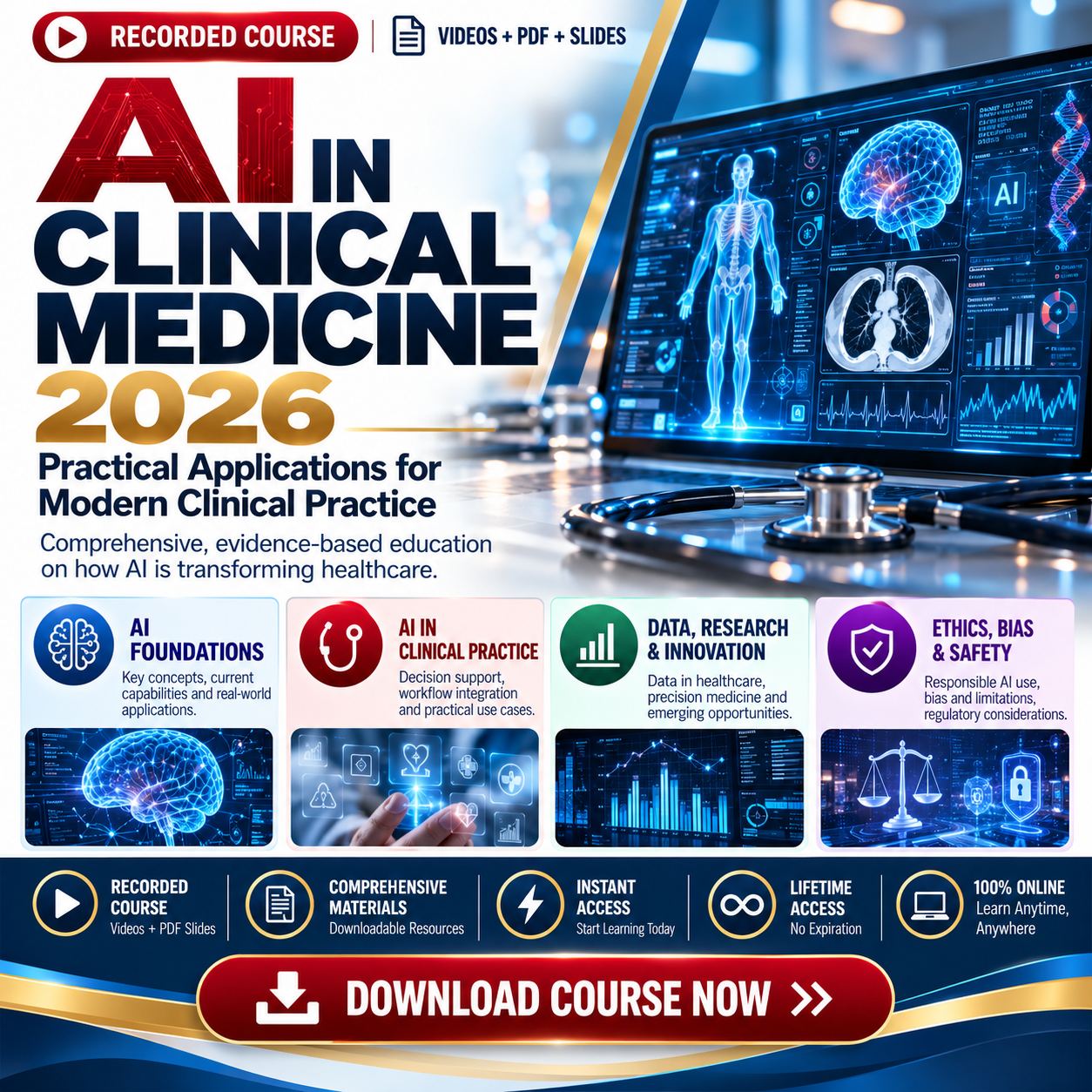

A comprehensive recorded program exploring how artificial intelligence is moving into real clinical practice — from machine learning and large language models to clinical decision support, ambient documentation, precision medicine, ethics, bias, regulation, and practical implementation.
The program is built for clinicians who want a practical understanding of artificial intelligence without needing a technical background.
AI in Clinical Medicine 2026 begins with foundational concepts such as machine learning, deep learning, large language models, and the medical data infrastructure that supports clinical AI.
It then moves into real-world use cases including chatbots, ambient scribes, clinical decision-support systems, patient monitoring, disease prediction, medical education, drug development, precision oncology, and AI-powered clinical trial design.
The program also addresses responsible implementation, algorithmic bias, patient privacy, regulation, leadership, workflow integration, and the practical limitations clinicians need to understand before adopting AI tools.
The course connects technical concepts with the clinical, operational, ethical, and leadership questions that determine whether AI is actually useful in care.
Machine learning, deep learning, large language models, technical background for clinicians, and medical data as the backbone of AI systems.
Clinical decision support, ambient documentation, chatbots, patient monitoring, diagnosis, outcome prediction, EHR integration, and specialty-specific use cases.
AI-designed therapeutics, drug development, clinical-trial design, precision oncology, personalized treatment, and AI-assisted research tools.
Ethics, algorithmic bias, fairness, privacy, law, regulation, responsible implementation, health-system leadership, and adoption strategy.
Roles below follow the official Harvard 2026 faculty section: Maha Farhat and Samir Kendale are Course Directors; Isaac Kohane is featured as course faculty and delivers the opening keynote.

Massachusetts General Hospital Division of Pulmonary and Critical Care Medicine
Gilbert S. Omenn Associate Professor of Biomedical Informatics
Associate Director, Bioinformatics and Integrative Genomics (BIG) PhD Track

Assistant Professor of Anaesthesia, Harvard Medical School
Medical Director of Anesthesia Informatics, Beth Israel Lahey Health
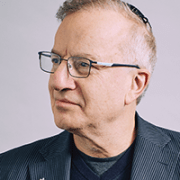
Chair, Department of Biomedical Informatics, Harvard Medical School
Marion V. Nelson Professor of Biomedical Informatics, Harvard Medical School
Associate Professor of Medicine, Brigham and Women's Hospital
The 2026 agenda moves from understanding AI, to ethics and advanced applications, to operational deployment across clinical specialties and healthcare organizations.
Designed for clinicians and healthcare professionals who want to understand how AI can be evaluated and integrated into real patient-care environments.
Recorded educational access designed for flexible self-paced review.
Foundations, ethics, regulation, clinical applications, and implementation.
Review the available educational presentations according to your own schedule.
Decision support, generative AI, ambient documentation, precision medicine, and more.
Return to the available course materials whenever you need a refresher.
Clear answers to common buyer questions.
No. This product contains recorded, on-demand educational materials for self-paced learning.
Yes. Large language models are included within the foundational AI curriculum and broader generative-AI discussions.
Yes. The program reviews clinical decision support, ambient scribes, patient monitoring, diagnosis and prediction, specialty-specific AI applications, and practical implementation strategies.
Yes. Ethics, algorithmic bias, fairness, privacy, law, regulation, and responsible AI implementation are major areas of the program.
Access instructions are provided after your order is completed so you can begin reviewing the available course materials right away.
No. The recorded course package offered here includes lifetime access.
No. The recorded package offered here does not include CME/CE credit or an official certificate.
Review machine learning, large language models, generative AI, clinical decision support, ambient documentation, precision medicine, ethics, regulation, specialty applications, and real-world implementation — at your own pace.
DOWNLOAD COURSE NOW