Original price was: $1,500.97.$179.97Current price is: $179.97.

Original price was: $1,500.97.$179.97Current price is: $179.97.
Original price was: $700.97.$99.97Current price is: $99.97.
Original price was: $900.97.$149.97Current price is: $149.97.

Original price was: $1,475.97.$179.97Current price is: $179.97.
Original price was: $900.97.$139.97Current price is: $139.97.
Total: $179.97

Description
FEATURED TOPICS
Cystic Kidney Disease
Glomerular Disease
CKM Syndrome
Hypertension
Acute Kidney Injury
Clinical Kidney Care
About This Course
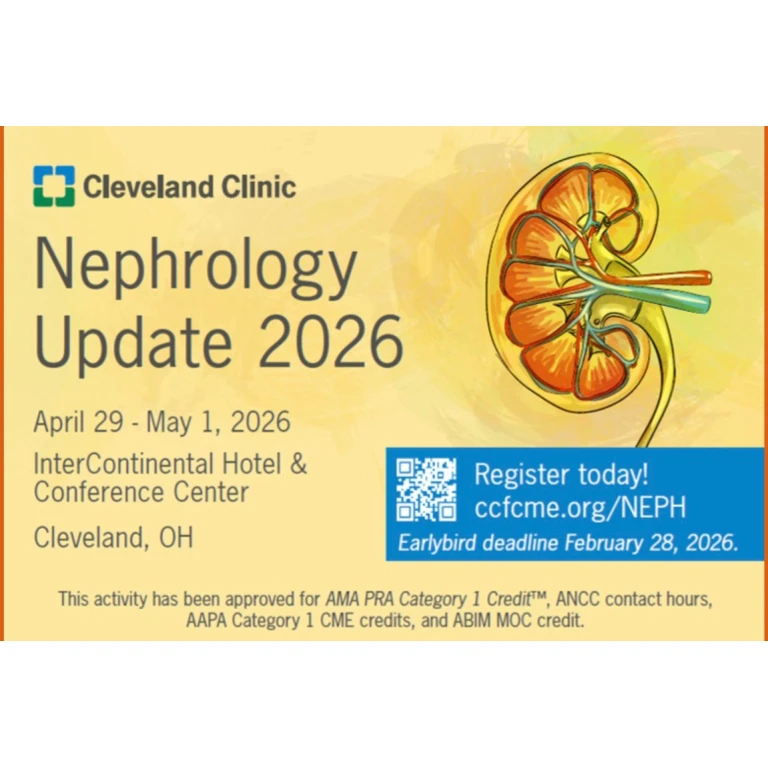
Cleveland Clinic Nephrology Update 2026 provides a contemporary, practice-focused review of important developments across kidney medicine.
The program explores complex kidney disease from several complementary perspectives, including glomerular disease, cystic kidney disease, cardiovascular and metabolic interactions, blood-pressure management and acute deterioration in renal function.
The emphasis is on translating evolving nephrology concepts into practical diagnostic reasoning and management strategies for clinicians caring for patients with kidney disease.
Core Learning Areas
Glomerular Disease
Diagnostic reasoning and evolving approaches to diseases affecting the glomerulus, proteinuria and inflammatory kidney injury.
Cystic Kidney Disease
Clinical evaluation of cystic kidney disorders with attention to progression, complications and long-term kidney protection.
Cardiovascular-Kidney-Metabolic Care
The interconnected relationship between kidney dysfunction, cardiovascular disease and metabolic risk.
Hypertension & AKI
Blood-pressure management, acute kidney injury, renal perfusion and practical approaches to protecting kidney function.
A Practical Kidney-Care Framework
From initial kidney assessment to disease-specific management.
1
Assess
Evaluate kidney function, blood pressure, urinary findings and systemic risk factors.
2
Classify
Differentiate chronic, cystic, glomerular, vascular and acute kidney presentations.
3
Protect
Address hypertension and cardiovascular-metabolic risk while preserving kidney function.
4
Monitor
Track progression, treatment response and complications over time.
Featured Cleveland Clinic Nephrology Faculty
Kidney medicine expertise spanning clinical nephrology, complex kidney disease and onco-nephrology.
GLOMERULAR DISEASE
HYPERTENSION
COMPLEX KIDNEY CARE
ONCO-NEPHROLOGY
Learning Objectives
- Review evolving concepts in contemporary kidney disease management.
- Improve the clinical assessment of glomerular and cystic kidney disease.
- Recognize the interaction between cardiovascular, kidney and metabolic disease.
- Review practical approaches to hypertension in nephrology practice.
- Strengthen the evaluation and management of acute kidney injury.
- Apply contemporary nephrology concepts to complex clinical decision-making.
Nephrology Update 2026 — Topic Map
Focused review of major clinical themes in contemporary nephrology.
Who Should Take This Course
- Nephrologists.
- Internal medicine physicians.
- Hospitalists and clinicians caring for patients with kidney disease.
- Nephrology residents and fellows.
- Nurse practitioners and physician assistants.
- Healthcare professionals interested in contemporary kidney disease management.
Delivery & Access
Recorded Sessions
On-demand nephrology update presentations.
Kidney-Focused Review
Structured contemporary nephrology content.
Self-Paced
Study according to your own schedule.
Lifetime Access
Review the course whenever needed.
Frequently Asked Questions
What areas of nephrology are covered?
Major themes include cystic kidney disease, glomerular disease, cardiovascular-kidney-metabolic syndrome, hypertension and acute kidney injury.
Does the course address cardiovascular and metabolic kidney risk?
Yes. Cardiovascular-kidney-metabolic interactions are an important part of the course focus.
Does it include acute kidney injury?
Yes. Acute kidney injury is included among the main clinical topics highlighted in the course.
Is this a live course?
No. This product contains recorded, on-demand educational materials.
Does access expire?
The course package offered here includes lifetime access.
RECORDED COURSE • NEPHROLOGY UPDATE • LIFETIME ACCESS
Cleveland Clinic Nephrology Update 2026
Kidney Disease • CKM Syndrome • Glomerular Disease • Hypertension • AKI
↓ DOWNLOAD COURSE NOW
INSTANT ACCESS • LIFETIME ACCESS
You must be logged in to post a review.
-
PDF
Pediatric Hematology & Oncology Secrets 2nd Edition
Original price was: $71.89.$27.89Current price is: $27.89. Add to cart -
PDF
2025 ACP Internal Medicine Board Review Course – Greater Chicago, IL
Original price was: $1,495.00.$149.97Current price is: $149.97. Add to cart -
PDF
ACP CME 165 2025
Original price was: $1,500.00.$169.97Current price is: $169.97. Add to cart
Reviews
There are no reviews yet.