MH
Mental Health & Adjustment
Adjustment to illness, anxiety, depression, demoralization, coping, quality of life and the psychological impact of cancer treatment.
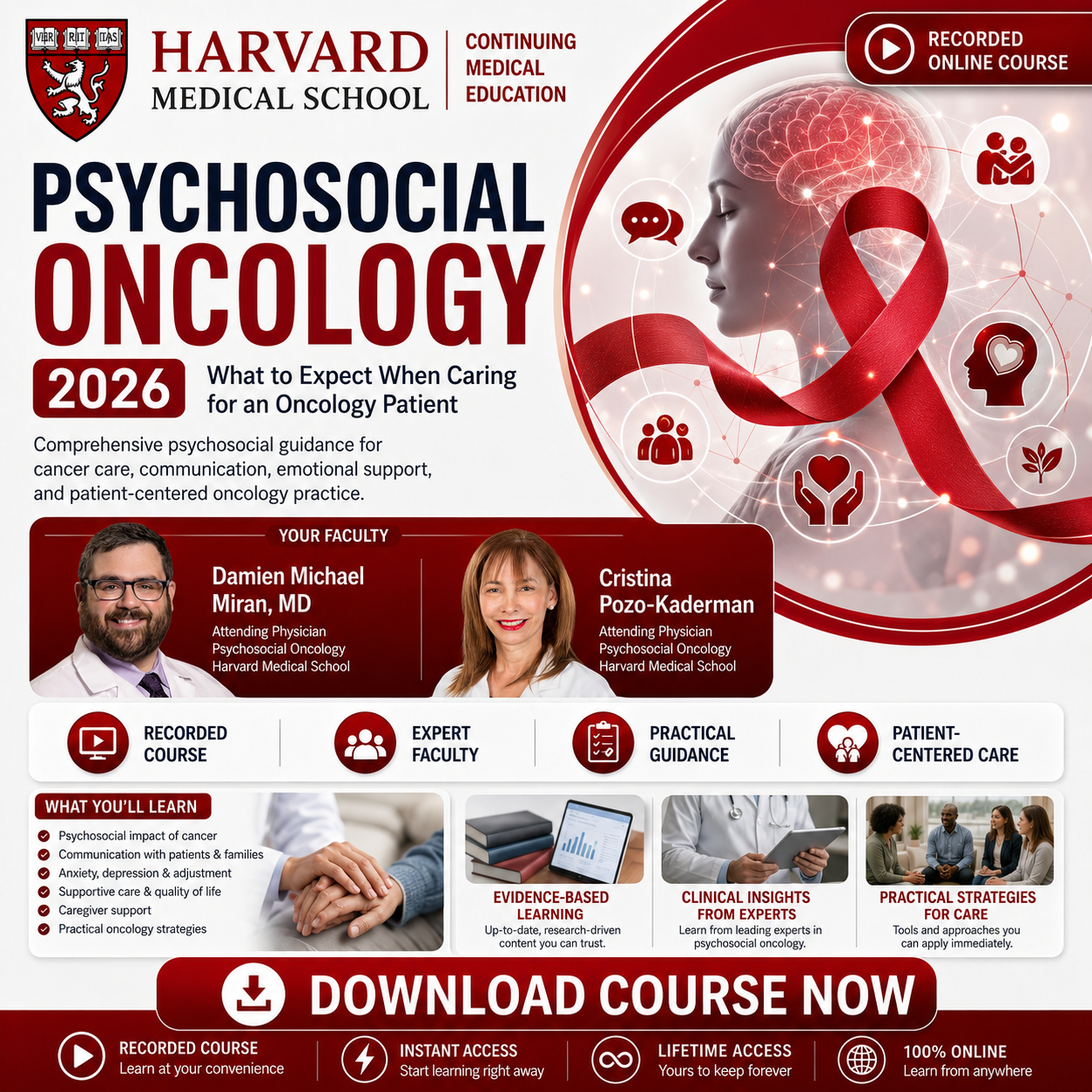

A focused two-day recorded psychosocial oncology program covering cancer-related mental health, anxiety, depression, adjustment to illness, substance use, psychedelics, cannabis, bereavement, supportive care, young adult oncology, pediatric psychosocial care and difficult patient interactions.
This program focuses on the psychological, behavioral, family and supportive-care needs of people living with cancer from diagnosis through treatment, survivorship and end-of-life care.
Psychosocial Oncology: What to Expect When Caring for an Oncology Patient 2026 is a two-day Dana-Farber Cancer Institute program developed for clinicians who care for patients affected by cancer and its psychological and social consequences.
Day one emphasizes whole-person cancer care, adjustment to illness, family and caregiver needs, anxiety, depression, survivorship and spiritual care. Day two expands into substance use, psychedelics, cannabis, challenging patient interactions, bereavement, support groups, existential distress, pediatric psychosocial care and the needs of young adults with cancer.
Your recorded package includes 22 videos and 22 PDF resources, totaling approximately 2.37 GB, for flexible self-paced review.
The curriculum combines clinical mental-health management with communication, supportive oncology and population-specific care.
Adjustment to illness, anxiety, depression, demoralization, coping, quality of life and the psychological impact of cancer treatment.
Couples, caregivers, family systems, difficult interactions, spiritual care, survivorship and communication across the cancer trajectory.
Substance misuse, cannabis, psychedelics and evolving psychosocial considerations in oncology practice.
Bereavement, support groups, existential distress, end-of-life concerns, pediatric psychosocial care and young adult oncology.
Harvard lists Damien Miran and Cristina Pozo-Kaderman as the two Course Directors for the 2026 Psychosocial Oncology program.

Psychiatrist, Dana-Farber Cancer Institute
Adult Psychosocial Oncology • Consultation-Liaison Psychiatry

Director, Young Adult Program • Director, Interprofessional Education
Senior Psychologist, Dana-Farber Cancer Institute
A concise overview of the April 30–May 1, 2026 program.
Designed for professionals who care for people with cancer and want stronger skills in psychosocial assessment, communication and supportive oncology.
Recorded educational materials organized for flexible, self-paced review.
Complete sessions from the two-day 2026 psychosocial oncology program.
Downloadable course materials for study and clinical reference.
Mental health, substance use, supportive care and special populations.
Recorded educational materials with instant delivery and lifetime access.
Clear answers to common buyer questions.
No. This product contains recorded, on-demand educational materials for independent study.
The package includes 22 recorded videos and 22 PDF resources, totaling approximately 2.37 GB.
The course covers adjustment to illness, anxiety, depression, coping, demoralization, survivorship, family dynamics, spiritual care and challenging patient interactions.
Yes. The program includes substance use and misuse, cannabis, psychedelics and related psychosocial considerations in oncology care.
Yes. Bereavement, support groups, existential distress, spiritual care and end-of-life issues are included.
Yes. The curriculum includes pediatric psychosocial care and the specific needs of young adults living with cancer.
No. Lifetime access is included with the purchased recorded course materials.
No. CME/CE credit and an official certificate are not included with this recorded course package.
Review cancer-related mental health, families and caregivers, substance use, bereavement, supportive care, survivorship, young adult oncology and difficult clinical interactions — at your own pace.
DOWNLOAD COURSE NOWYou must be logged in to post a review.
Reviews
There are no reviews yet.