NGS
NGS & Bioinformatics
NGS pipelines, informatics architecture, variant detection, indels, RNA and DNA analysis, long-read sequencing, isoforms, and practical interpretation.
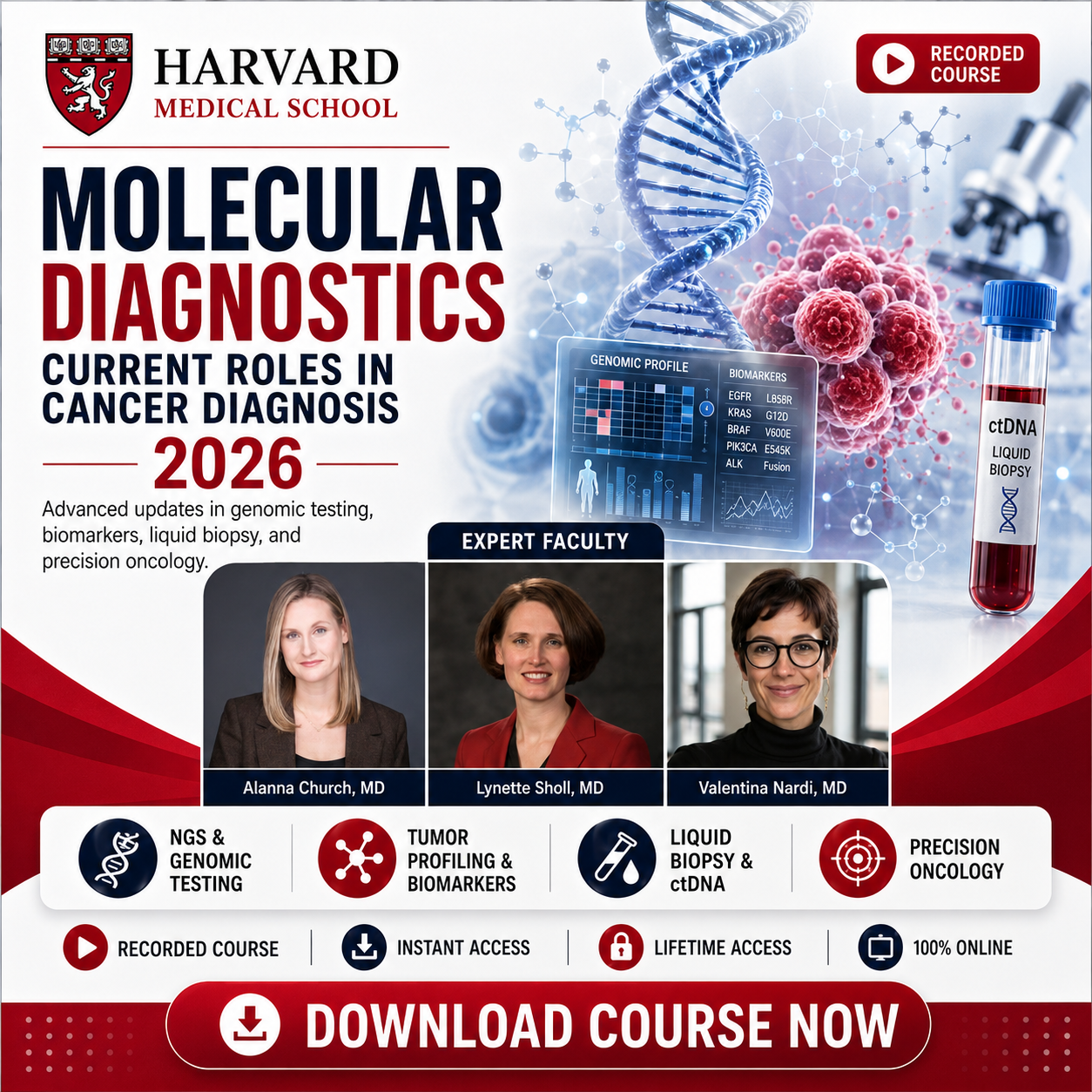

A comprehensive recorded molecular oncology program covering next-generation sequencing, bioinformatics, liquid biopsy, gene fusions, molecular biomarkers, tumor-specific testing, laboratory implementation, and precision cancer care.
This three-day recorded program connects molecular laboratory methods with real clinical oncology, pathology, and precision-medicine workflows.
Molecular Diagnostics: Current Roles in Cancer Diagnosis 2026 provides a clinically focused introduction to modern molecular diagnostics for pathologists, oncologists, laboratory geneticists, and other professionals involved in cancer care.
The program reviews next-generation sequencing pipelines, informatics architecture, gene fusion detection, liquid biopsy, circulating tumor DNA, tumor mutational burden, microsatellite instability, homologous recombination deficiency, copy-number analysis, cytogenomics, methylation profiling, germline testing, and tumor-normal paired sequencing.
Tumor-specific sessions span sarcoma, gynecologic and pediatric tumors, genitourinary cancers, gliomas, melanoma, breast, lung, gastrointestinal, thyroid and salivary tumors, leukemia, lymphoma, and myeloid neoplasms — with additional attention to AI, pharmacogenomics, program building, reimbursement, and laboratory leadership.
The curriculum combines technical molecular methods, disease-specific applications, interpretation, communication, and implementation.
NGS pipelines, informatics architecture, variant detection, indels, RNA and DNA analysis, long-read sequencing, isoforms, and practical interpretation.
Tumor mutational burden, MSI, HRD, copy-number variation, viral signatures, circulating tumor DNA, tissue-versus-liquid testing, and molecular residual disease concepts.
Molecular testing in sarcoma, breast, lung, GI, GU, gynecologic, pediatric, thyroid, salivary, CNS, melanoma, leukemia, lymphoma, and myeloid neoplasms.
Tumor boards, report communication, pharmacogenomics, AI, program development, reimbursement, regulation, access, test selection, and laboratory leadership.
Harvard lists Alanna Church, Lynette Sholl, and Valentina Nardi as Course Directors for Molecular Diagnostics: Current Roles in Cancer Diagnosis.

Associate Professor, Harvard Medical School
Director of Innovation in Pediatric Cancer Genomics
Associate Director, Laboratory for Molecular Pediatric Pathology
Program Director, Harvard Molecular Genetic Pathology Fellowship

Professor of Pathology, Harvard Medical School
Chief, Pulmonary Pathology Division
Division Chief of Molecular Diagnostics, Mass General Brigham

Associate Professor of Pathology, Harvard Medical School
Associate Director of Hematological Molecular Pathology, Mass General Brigham
Hematopathology and gene-fusion diagnostics
A concise overview of the official 2026 three-day program.
Designed for clinicians and laboratory professionals involved in cancer diagnosis, molecular testing, precision oncology, and multidisciplinary cancer care.
The complete recorded 2026 program is organized for convenient self-paced review.
Recorded molecular-diagnostics sessions across the full three-day curriculum.
Subtitle files supporting easier review of the recorded lectures.
Downloadable educational materials for reference and structured review.
Compact recorded learning package with lifetime access after purchase.
Clear answers to common buyer questions.
No. This product contains recorded, on-demand educational materials for independent study.
The package includes 40 recorded videos, 40 English subtitle files, and 41 PDF educational resources.
Yes. The curriculum includes NGS pipelines, informatics architecture, indel detection, RNA and DNA analysis, long-read sequencing, clinically significant isoforms, and practical bioinformatics.
Yes. Liquid biopsy, circulating tumor DNA, tissue-versus-liquid testing, and related molecular biomarker concepts are included.
The course includes molecular diagnostics for sarcoma, breast, lung, gastrointestinal, genitourinary, gynecologic, pediatric, thyroid, salivary, CNS, melanoma, leukemia, lymphoma, and myeloid malignancies.
Access instructions are provided after your order is completed so you can begin reviewing the available course materials right away.
No. The available recorded course package is provided with lifetime access.
No. The recorded package offered here does not include CME/CE credit or an official certificate.
Review next-generation sequencing, bioinformatics, liquid biopsy, gene fusions, molecular biomarkers, tumor-specific testing, AI, regulation, reimbursement, laboratory leadership and precision oncology — at your own pace.
DOWNLOAD COURSE NOWYou must be logged in to post a review.
Reviews
There are no reviews yet.